
I remember: My older brother’s Monte Carlo rolled up in a three-wheel motion and parked in front of Booker T. Washington High School in East Dallas, Texas. Its gold Daytons glinted in the sun. There was just enough time for me to hop out. Centuries before this, in the land now known as Mexico, where I was born, our Indigenous ancestors donned turquoise jewelry. They made masks out of it.
Today, specks of gold and turquoise find their way into my art.
My art, my community — they come from the same place: A place that is undefined by here or there, a place uninhibited by borders. I’m not a political artist. I paint my experience, my truth, and if that only looks like politics to you, I’m not here to tell you differently. It does not change what you’re looking at; it just changes you.
Steve Visneau
Being From Both
Growing up in East Dallas in the ‘80s and ‘90s. I began exploring art through cartoons, graffiti, and animated movies, and then in the creations of Diego Rivera, David Alfaro Siquieros, and José Clemente Orozco. They had come before me and left behind a legacy and foundation that influenced my work and informed my understanding of the social impact art has on humanity. I saw how art emboldened cultural movements — from the Civil Rights Movement to the Chicano movement.
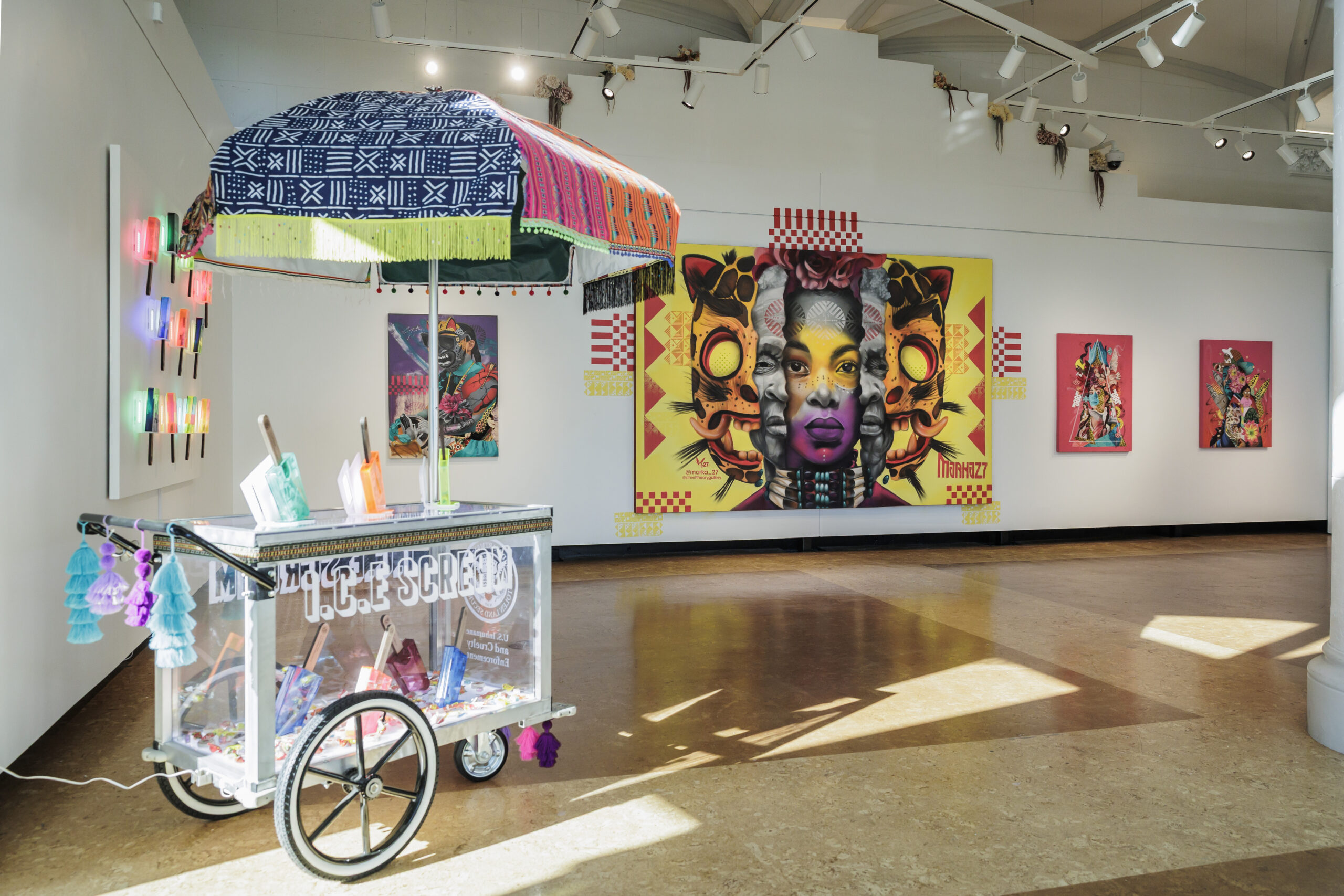
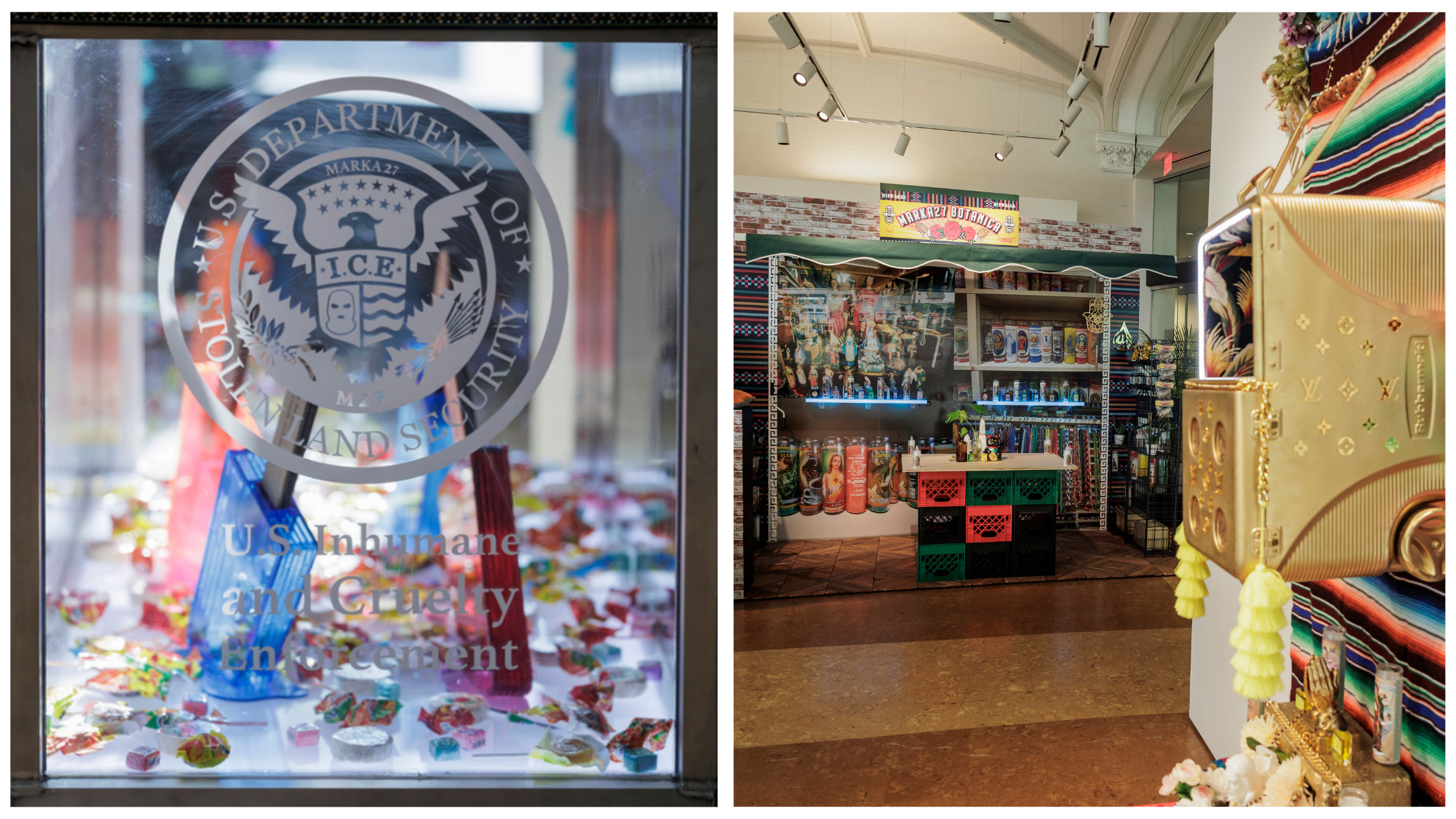
I’d decided on the name “Ni de Aquí, Ni de Allá” (“Not from Here, Not From There”) for my exhibition to honor my heritage. As immigrants, as Latinos, we are not from here, and we are not from there, because we are from both. To me, this is a form of empowerment. We can speak authentically to finding a home in the United States as well as maintaining our connections to where we were born or where our ancestors are from. I believe it's completely possible to love two homelands at the same time.
With “Ni de Aquí, Ni de Allá,” I depict my dual identity experience, both the beautiful moments and the harsh realities. Growing up, I experienced the cruelty of immigration enforcement on a personal level: My father was deported three times throughout my adolescence. Immigration enforcement took my family apart. On the other hand, I've also experienced the beauty of growing up in this country, the power of being deeply connected to its many cultures — from Tejano to Chicano, from hip hop to pop culture, and so much more.
Steve Visneau and Hyperallergic, via Narong Tintamusik
My Artwork Had Been Censored
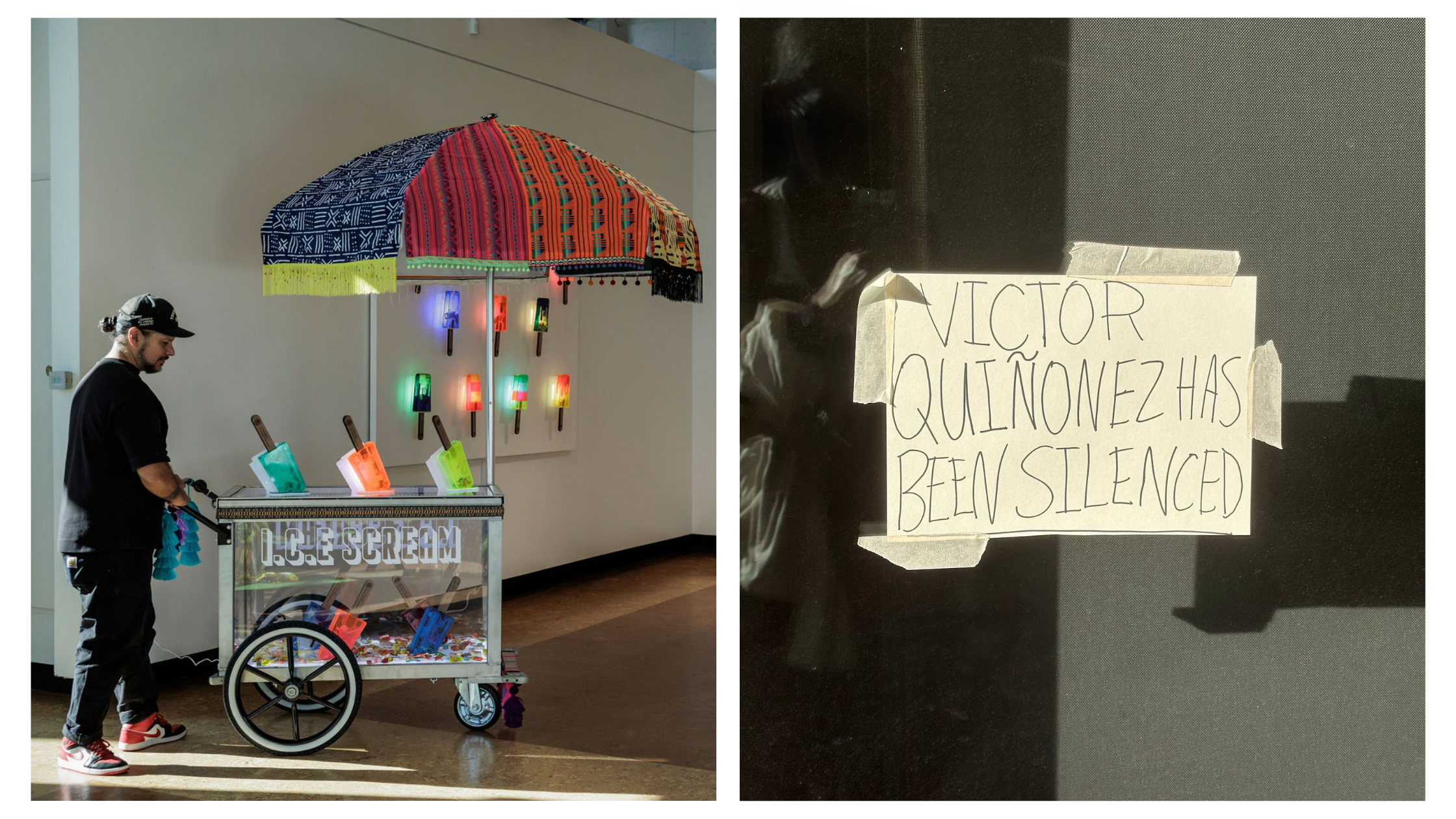
In February, my phone buzzed with direct messages from concerned students at The University of North Texas, or UNT. “Ni de Aquí, Ni de Allá,” which was temporarily on display there, had been suddenly covered up — following orders from university officials. Without warning or explanation, my artwork had been censored. And I only found out because the students told me.
Censorship is dangerous. As a public university, UNT is subject to the First Amendment. Silencing artwork displayed on campus just because someone doesn’t agree with what is expressed is wrong. I feel waves of gratitude for the students who reached out to me that day. I was and still am proud of them for speaking out, asking questions, and spreading the news. Texas has a long history of student-led collective action, and their power is undeniable.
Later, after I learned from leaked transcripts about why the university shut down my exhibition, I acknowledged the power of art — how it could be so powerful that a university felt compelled to censor it.
Art speaks volumes. And when it is silenced, when we are silenced, it validates the magnitude of our voices and our self-expression.
“Ni de Aquí, Ni de Allá” is my lived experience, but I’ll be the first to say: This experience is not unique to me. “Ni de Aquí, Ni de Allá” is the experience of millions of people in this country, and I wanted to share a very real representation of what being Latino in the U.S. means for many of us. I wanted to show that here in Texas, a state with some of the largest communities of Latinos, and on a campus where nearly a third of the student population is Latino.
It’s disappointing to me that people who might have felt represented — that could have seen themselves, their families, or their own experiences in this work — were robbed of that feeling. University officials took away my ability to share this experience and let people know they are not alone.
Steve Visneau
American Dreams
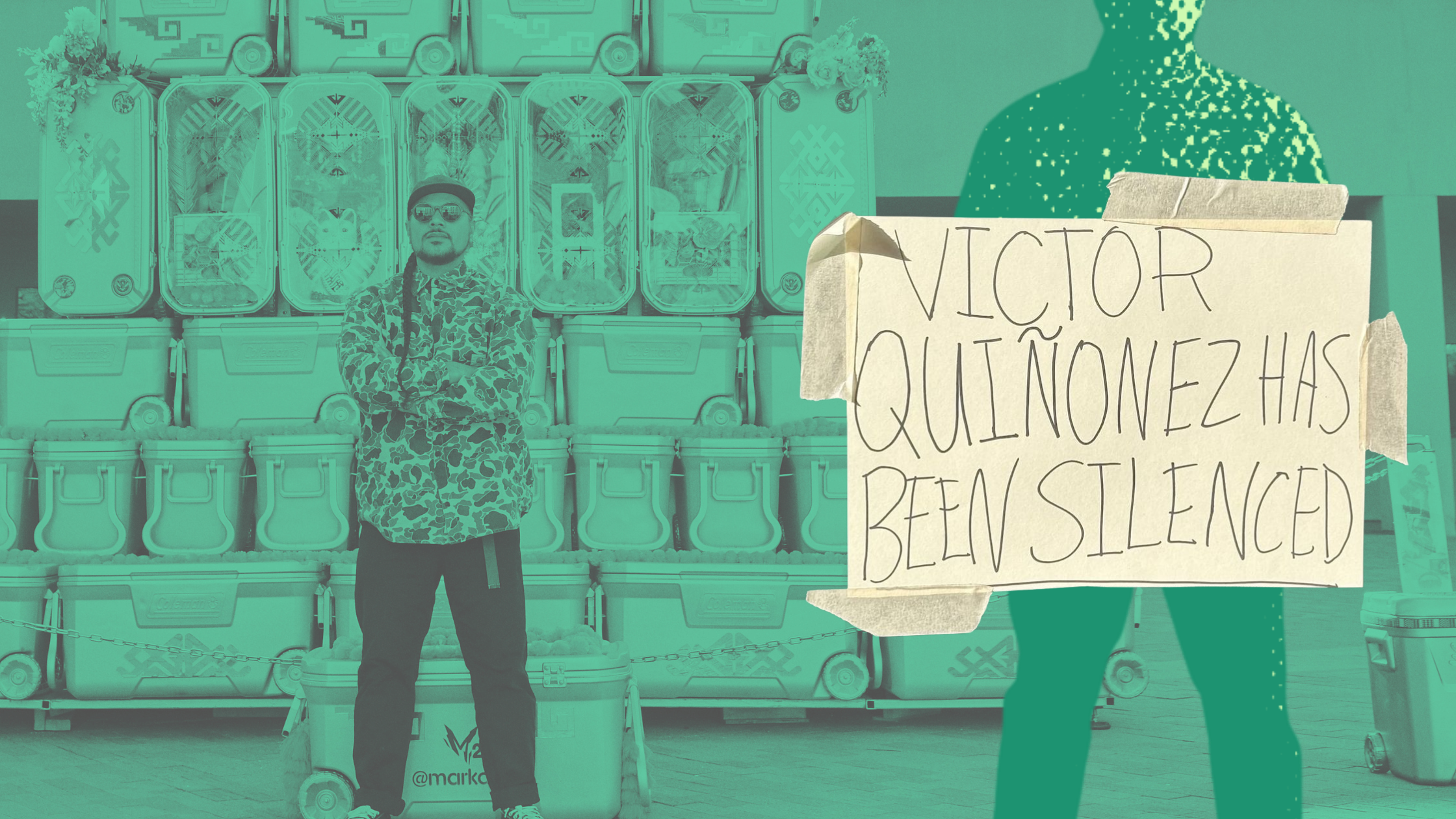
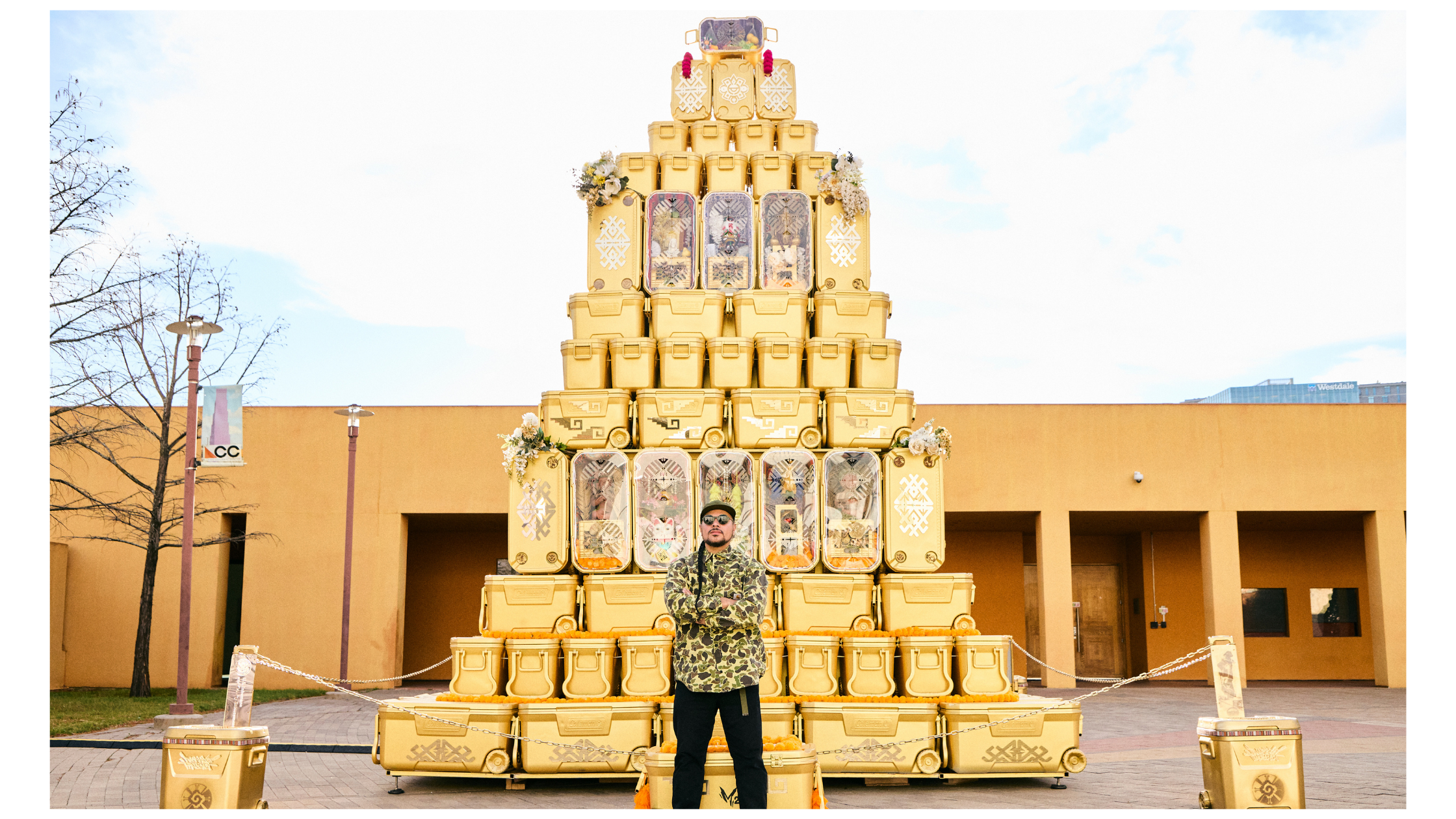
While “Ni de Aquí, Ni de Allá” was being covered up and shuttered by UNT officials, another exhibition of mine in Dallas was being celebrated at the Latino Cultural Center: “Elevar La Cultura” (“Elevate The Culture”) — a 22-foot Mayan pyramid constructed out of 200 coolers.
“Elevar La Cultura” is a representation of community, of immigrant experiences, of American dreams. Throughout my life, I’ve seen people — on busy street corners, near highways and intersections, or in subway stations — selling water, mangoes, tamales, or Cokes out of these coolers. To me, coolers represent our communities being independent, making it work here in the U.S., no matter what and no matter where we are from.
I also think of coolers in the shaded area of a backyard during barbecues, the wheels of another crunching over grains of sand during a family beach trip. And how in those moments, you might think: We made it.
“Elevar La Cultura” is a representation of resilience, strength, and independence. To me, that is the American Dream, and it is full of our immigrant communities.
Steve Visneau
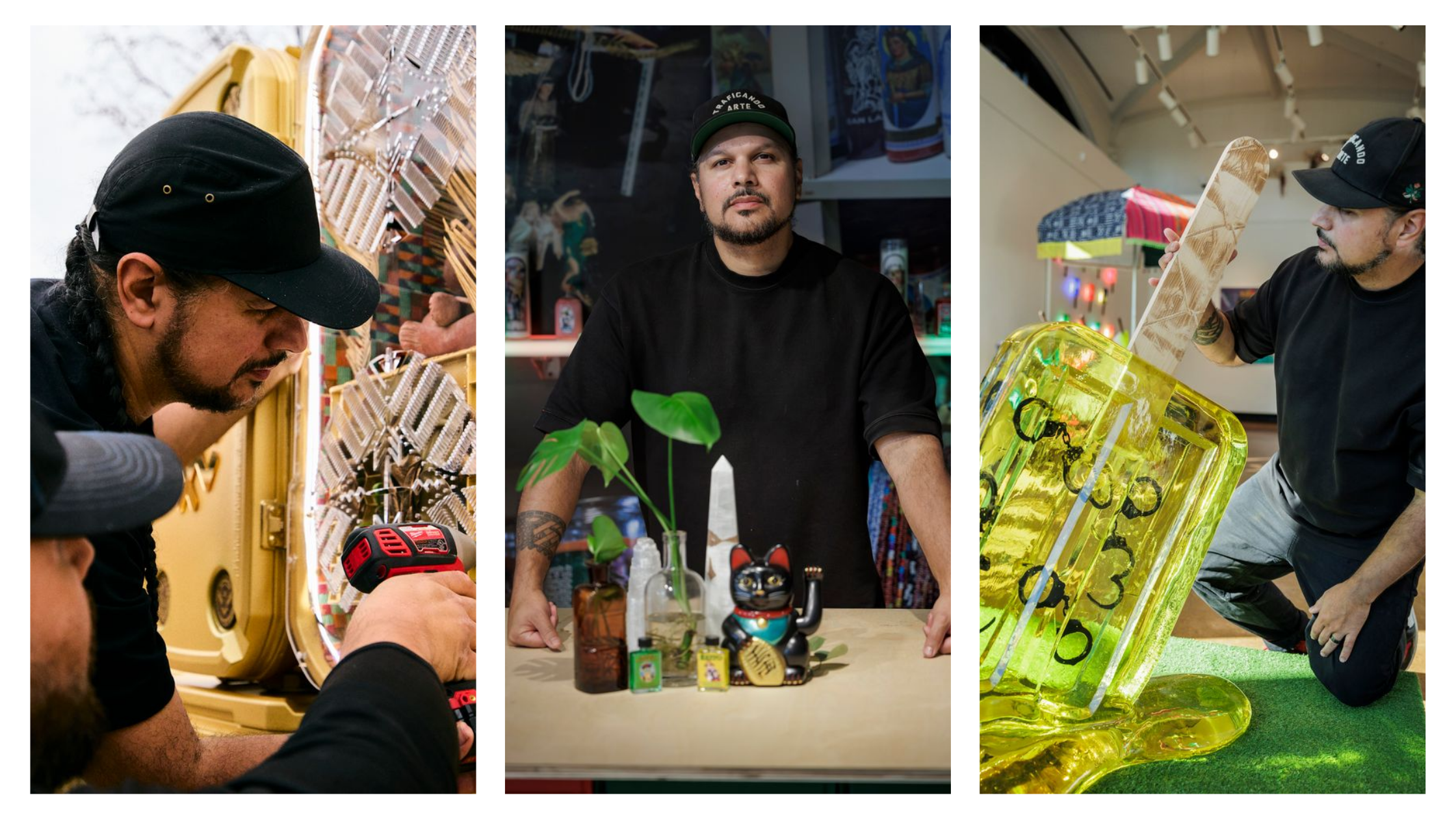
As a 30-plus year multidisciplinary artist, I’m looking forward to the future and working with museums, institutions, and organizations that uplift and support authentic representation and creative freedom.
I won’t stop creating. Art and culture is in our blood. Centuries ago, we made larger-than-life pyramids and decorated walls with art. Now, this art comes in new forms, too — from the body paint on our lowrider cars to the tattoos we paint on our bodies.
Art is an evolution of something that has always been and will always be, something that is both here and there, regardless of who wants to stop it.
Steve Visneau
I think often about the people who didn’t get to see themselves reflected in this work. That matters to me. I am exploring what comes next for “Ni de Aquí, Ni de Allá,” with the intention of bringing it back into a space where it can be experienced fully, openly, and without restriction — especially here at home in Dallas.
Stay connected with Marka27 on Instagram or through his website — and join the ACLU of Texas in our work against censorship by becoming an ACLU of Texas Advocate.