


Monica Roberts (1962-2020) reminds us that preserving our stories is essential to protecting our rights and shaping our future.
To this day, she remains one of the most famous Texans to do this work. A Black transgender woman and proud Houstonian, Monica began her transition as an airline agent in 1993 and quickly became a powerful activist in the trans community, serving as a founding member and Lobby Chair for the National Transgender Advocacy Coalition from 1999-2002. Her work documenting and preserving transgender history started in 2004, when she began writing “TransGriot” as a newspaper column, eventually founding the famous blog of the same name in 2006. She took on the role of “griot,” a term describing storytellers from West Africa.
Monica understood that telling our stories is a form of memory and advocacy.
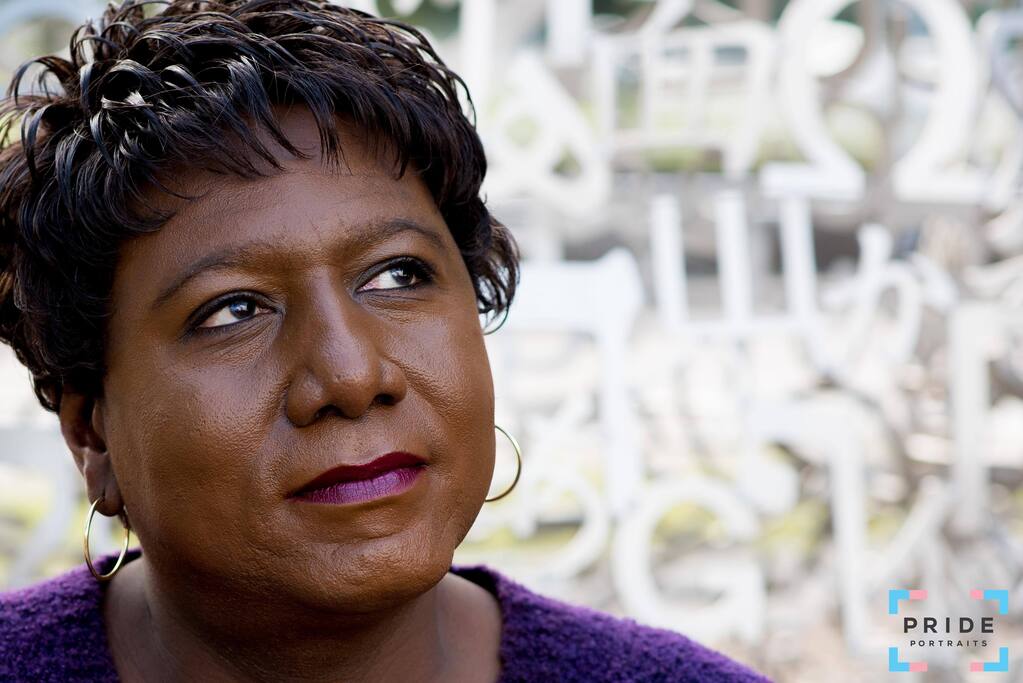
Pride Portraits
Storytelling Is Memory
Monica founded “TransGriot” for a few reasons. Within the LGBTQIA+ community, there were few if any transgender publications focused on Black people and perspectives, and thus no discussion of the intersections between transphobia and racism. Monica used her blog to address racism in the LGBTQIA+ community and transphobia in the Black community, building bridges within and between these communities
In the mainstream media, transgender people — especially Black and Brown trans women — were being deadnamed and misgendered as victims of homicide. Monica knew that the first 48 hours after a homicide are crucial in investigations, and that justice for slain trans people would be delayed if police continued to misidentify them in the media. So, she tracked down the names and gender identities of each victim, memorialized each one in her blog, and pushed the media to correct their stories accordingly.
No one would be erased under her watch.
Slowly, as a result, media outlets started to change how they reported on transgender victims of crimes, thereby ensuring victims could be properly remembered and increasing the odds of attaining justice. This also allowed our communities to start compiling demographic data on violence against transgender people and to track trends more clearly.
Monica not only documented trans victims of violence, but also the lives, histories, and achievements of Black trans people — at a time when the mainstream media often failed to do so. This redefined best-practice journalism and inspired more LGBTQIA+ people to go into journalism and blogging, gifting our communities with even more storytellers.
One of Monica’s greatest legacies is the archive she created. Thanks to her, we have an archive of transgender history, especially Black transgender history, that spans from 2004 to 2020 and often covers Black and Brown transgender Texans. Her work ensures that countless stories, milestones, and leaders are not forgotten. It also highlights the work that still needs to be done to end the epidemic of violence against Black transgender women.
All movements for justice are strengthened by preserving history and honoring those who came before. The George Santayana quote, “Those who cannot remember the past are condemned to repeat it,” holds true: Our history and our ancestors hold many valuable lessons we can take with us in our work for a better world. They can also inspire us when we’re spiraling towards hopelessness, as we remember those who led the way and what we owe them and future generations.
Storytelling Is Advocacy
Monica also knew that narratives shape public understanding and policy. She often wrote about the Texas legislature in “TransGriot,” especially about bills that would harm the transgender community.
Monica used journalism to challenge misinformation, amplify marginalized voices, and build community. Her posts inspired trans people of all races to make the journey to the Texas Capitol to testify at hearings, build community, and demand to be heard.
Storytelling is a critical advocacy tool. Telling our own stories can inspire others to tell theirs — adding to a community’s collective self-knowledge and understanding. Storytelling can even force politicians to face the truth about the policies they promote and the lies they spread. It can be tempting for advocates to solely rely on facts and figures when challenging transphobic policies and arguments, but Monica knew that stories most often change hearts and minds. The stories that she and those she inspired told in the Texas Capitol often resulted in the deaths of harmful bills, as legislators lost their appetite to continue pushing them.
These stories also inspired the creation of pro-LGBTQIA+ bills. Monica was the first person I ever heard speak about the “gay/trans panic” defense, an abhorrent legal excuse used by people who committed violence against LGBTQIA+ people to seek lighter punishment. Her stories gave me the courage to talk to lawmakers about a friend I’d lost to violence whose assailant used the same defense. Our stories combined resulted in the creation of the “gay/trans panic” defense ban bill, which community advocates have been advancing for a decade now.
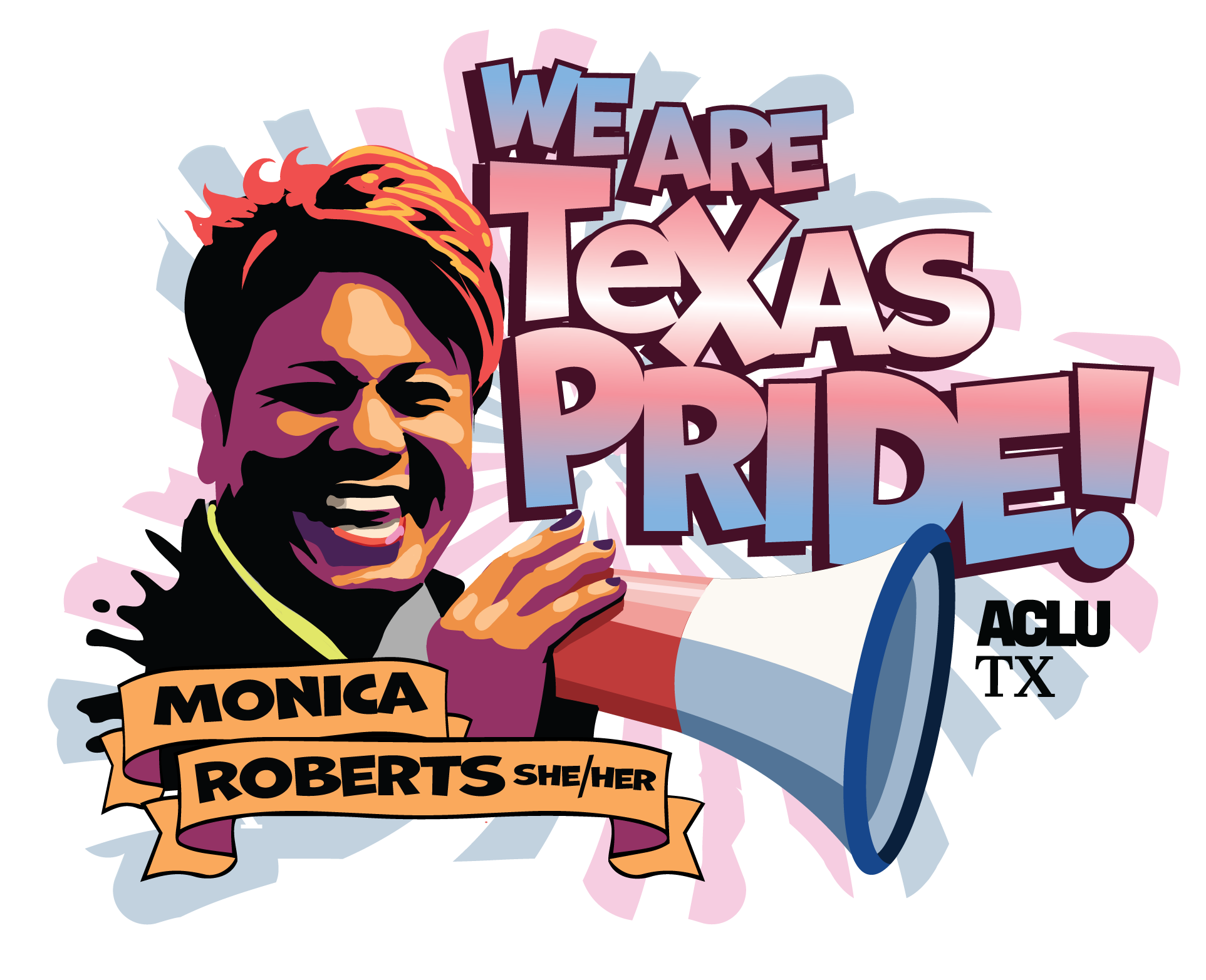
Continuing Monica's Legacy
Censorship has long been one of the tools that politicians use to attempt to control what we know and how we think — often with the goal of further marginalizing Black, Brown, and LGBTQIA+ people. Today, we’re witnessing the Trump administration remove LGBTQIA+ history and resources from its websites, while Texas politicians enact bans on diversity, equity, and inclusion programming in public schools. This landscape makes it even more important to remember the people who documented, preserved, and advocated for our communities.
Monica is remembered as a griot, an auntie, a sister, an advocacy icon, and a beloved friend. It's important to remember the griot who ensured so many other people were remembered too.
Monica shows us that storytelling can change hearts, preserve history, and fuel movements. We are deeply lucky to have had her in the fight for freedom — and to have her work to return to for historical context and inspiration. The archives she left behind make it impossible for those who would erase us to ever succeed.
We can honor Monica’s legacy by continuing to tell our stories, uplift our communities, and ensure that no one is erased. If you’re interested in opportunities to do that work alongside us, you can join us as an ACLU of Texas Advocate today.