
News & Commentary
Alabama Hospitals To Pregnant Women – "Sorry, honey, we won’t help you here."
It's what every pregnant woman fears. There she is excited to be pregnant for the first time. She is finally getting over the morning sickness, and she and her husband have just shared the happy news with their friends and family. Then, one night the unimaginable happens. She is lying in bed and she begins to feel immense pain and cramping. She knows something isn't right. She goes to the bathroom and she sees blood. Quickly, she wakes up her husband and the two of them rush to the emergency room.
By By Jenny Lee, Staff Attorney, American Civil Liberties Union

Southwest Border Tour Excludes Border Communities
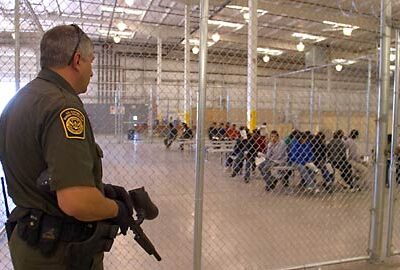
Newly confirmed Homeland Security Secretary Jeh Johnson wrapped up a two-day visit to the southwest border region last week, starting in McAllen, Texas, and ending in Tucson, Ariz. The stated purpose of the trip was to "tour border operations, receive briefings on the department's efforts to secure the border while facilitating lawful travel and trade, and meet with state and local law enforcement officials and other stakeholders."
By By Mitra Ebadolahi, Border Litigation Staff Attorney, ACLU of San Diego & Imperial Counties & James Lyall, Border Litigation Staff Attorney, ACLU of Arizona
Sec. Johnson Visits Border to Meet with the Brass, Not the Abused
By By Astrid Dominguez, Advocacy Coordinator, ACLU of Texas
On the Agenda: January 27-31
Washington may be in a deep freeze right now, but even the cold can't ruin the excitement in the air. Tomorrow is one of the best days of the year here in DC.
By By Meghan Groob, Media Relations Associate, ACLU
This Week in Civil Liberties (01/24/2014)
What Canadian celebrity, arrested for drag racing this week, could be deported if convicted of a felony?
By By Rekha Arulanantham, ACLU
Federal Courts Deal Setbacks to No-Fly List
Federal courts are scrutinizing the government's use of its secret No Fly List, and they don't like what they see. In two recent decisions, judges have either rejected or expressed skepticism about the government's arguments for secrecy and against a meaningful process for people to challenge their inclusion on the blacklist that bans them from travel to or from the United States or over American airspace. These decisions come on the heels of an August 2013 ruling in the ACLU's No Fly List challenge, in which a court found, in a first-of-its-kind preliminary ruling, that our clients' ability to fly internationally is protected by the Constitution.
By By Hugh Handeyside, Staff Attorney, ACLU, National Security Project
Three Things to Know About the Government Privacy Report on NSA Spying
This piece was originally published on Slate.
By By Alex Abdo, Staff Attorney, ACLU National Security Project
The Shrinking Rationale For Government Surveillance Camera Systems
Yesterday I wrote about how the spread of cameras throughout our public lives is irrevocably changing our privacy in public spaces, as well as society expectations around video surveillance—with people increasingly surprised when an unusual incident that takes place in public is not captured on video.
By By Jay Stanley, Senior Policy Analyst, ACLU Speech, Privacy & Technology Project
Stay Informed
Sign up to be the first to hear about how to take action.
By completing this form, I agree to receive occasional emails per the terms of the ACLU’s privacy statement.
By completing this form, I agree to receive occasional emails per the terms of the ACLU’s privacy statement.