
News & Commentary
Border Patrol Violently Assaults Civil Rights and Liberties
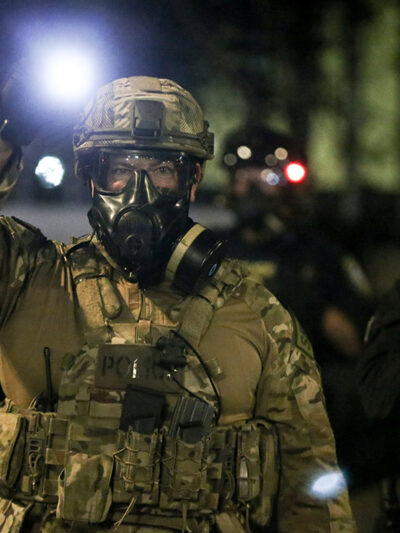
In the past week, unidentified federal officers in camouflage fatigues, labeled only “police,” abducted people off the streets of Portland in unmarked vehicles and threatened the “Wall of Moms” standing up for our Constitution. The administration later confirmed the unidentified officers were Border Patrol agents. This blatant demonstration of unconstitutional authoritarianism is demonstrating to the entire country the cruel capabilities of the U.S. Border Patrol. For communities that have historically borne the brunt of Border Patrol’s abuses — and still do — seeing these agents pose as a “secret federal police” force on the streets of Portland is no surprise. The Department of Homeland Security’s (DHS) Customs and Border Protection (CBP) agency, which includes Border Patrol, has been conducting secret, violent arrests of immigrants for years. CBP is the largest federal law enforcement agency in the United States, with nearly 20,000 Border Patrol agents across the country. CBP, in fact, has the largest law enforcement air force in the world — roughly equivalent to the size of Brazil’s entire combat air force — including fleets of planes, helicopters, and Predator drones. CBP and Border Patrol have expanded rapidly for almost 20 years, since CBP was relocated into the then-newly formed DHS. Fueled by unprecedented funding from Congress, Border Patrol’s abuses have grown increasingly violent and common. Their militarized over policing of border communities is deeply rooted in the nation’s history of over-policing of Black and Brown people. At least 102 people have died as a result of encounters with Border Patrol in the last decade. Six of these deaths were caused by Border Patrol agents shooting across the border into Mexico — murders met with complete impunity. The agency also lacks basic accountability practices: No agent has ever been convicted of criminal wrongdoing while on duty, despite deaths in custody and uses of excessive, deadly force. Border Patrol agents engage in criminal activities outside their official duties at five times the rate of other law enforcement agencies’ officials. The agency’s discipline system is broken and agency leadership has not weeded out corrupt agents. As James Tomsheck, CBP’s former internal affairs chief, described the agency’s culture: It “goes out of its way to evade legal restraints” and is “clearly engineered to interfere with [oversight] efforts to hold the Border Patrol accountable.” U.S. border communities have long understood the cruel capacity and impunity of this rogue agency. In the last month alone, a Border Patrol chase resulted in the deadliest crash in the city’s history, killing seven people, including four locals. In separate incidents also this month, a Border Patrol agent ran over a migrant with his vehicle and deported the survivor before local reporting exposed the incident, and Border Patrol found a woman dying at the base of President Trump’s border wall and side-stepped investigating or reporting her death. These grotesque examples are in addition to the thousands of children and families subjected to rape, kidnapping, or disappearance after being subjected to CBP’s unlawful asylum policies, or the horrors of Border Patrol’s systematic abuse of migrants in its custody. While Border Patrol’s foundation of overreach and culture of cruelty predates President Trump, this administration has boasted that it took the proverbial “handcuffs” off the agency, fueling even more abuses and trampling the rights of migrants and border residents alike.Since June, in response to nationwide protests against the murder of George Floyd, CBP deployed surveillance drones and helicopters over U.S. cities, including Buffalo, New York, Minneapolis, Miami, Chicago, and Philadelphia. CBP personnel flooded the streets of Washington, D.C. and other cities, with zero transparency around the agency’s mission, claimed authority, or any accountability for misconduct. As CBP officials cracked down on protesters in Portland, an internal DHS memo expressed the agency’s own concerns that CBP lacks the necessary training to respond to crowds or protests. Even with this knowledge, DHS has deployed these officers into our streets, with complete disregard for potential consequences. Now, the administration appears poised to expand its deployment of federal forces to what it calls “Democrat-run cities” across the country, including 150 agents to Chicago this week, risking another unconstitutional nightmare of police violence. This is a mistake that could prove lethal.This month, the House of Representatives took important first steps in cutting funding to CBP and other immigration enforcement agencies. But reining in the nation’s largest and least accountable law enforcement agency will require divestment from the nation’s massive border agency, and reinvestment in Black and Brown communities. Just this week, DHS announced it is transferring funds, allocated for accountability measures, to pay for a surge in unaccountable CBP staffing and paychecks. This is unacceptable and dangerous. We must collectively dismantle the systems of racism and xenophobia that have allowed Border Patrol — with its bloated budget, overbroad authority, and staff of unaccountable agents — to terrorize and kidnap protesters from the streets of Portland and undermine the civil rights and liberties of all American communities, near and far from the border.
By Shaw Drake, Andrea Flores
SCOTUS Watch 2020: Attacks on Birth Control Coverage
No one should have to fear being unable to afford healthcare, including birth control.
By Anjali Salvador

Dallas Police Killed My Unarmed Son. Their Brutality is a Global Problem.
Collette Flanagan, Founder, Mothers Against Police Brutality
In 2
By Collette Flanagan, Founder of Mothers Against Police Brutality
SCOTUS Watch 2020: A Major Win for LGBTQ Communities Everywhere
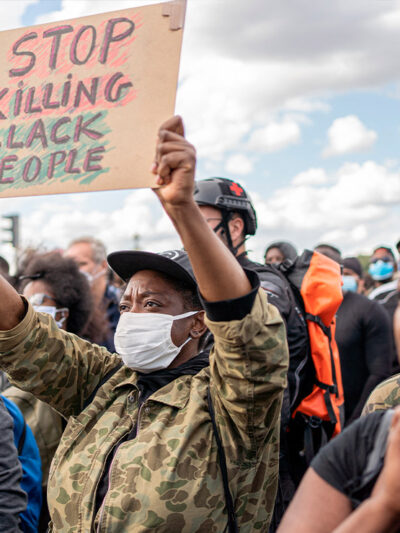
In the middle of Pride month, the Supreme Court issued a landmark decision in support of LGBTQ rights. The ruling in the case Bostock v. Clayton County, Georgia made it clear that it is illegal for employers to fire or otherwise discriminate against someone simply because they are LGBTQ.
By Brian Klosterboer
SCOTUS Watch 2020: Abortion Rights Reaffirmed, for Now
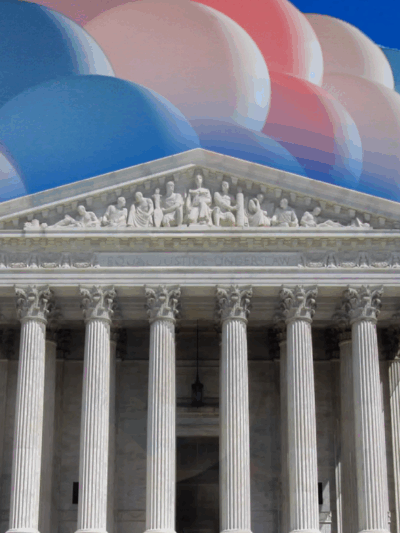
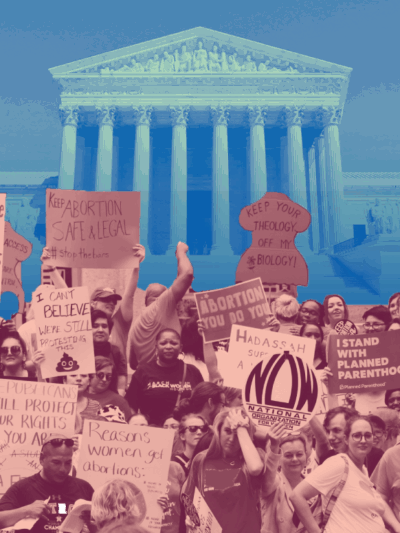
Earlier this week, in the much anticipated June Medical Services v. Russo case, the Supreme Court struck down a Louisiana law that required abortion providers to have admitting privileges at hospitals within 30 miles of their abortion clinics.
By Anjali Salvador
What Pride Means to LGBTQ+ Youth in Texas
Some people know Pride month as a demonstration of solidarity among members of the LGBTQ+ community and allies. Some people know it as the yearly commemoration of the historic Stonewall riots in 1969 and the first-ever Pride march. Other people know it as a time to engage in political action or to call for social change, like the fight for Black trans lives.
By TreShaun Pate

H.R. 40 is Not a Symbolic Act. It’s a Path to Restorative Justice.
For nearly three decades, my former colleague Rep. John Conyers of Michigan would introduce H.R. 40, legislation seeking to establish a commission to study and develop reparation proposals. Though many thought it a lost cause, he believed that a day would come when our nation would need to account for the brutal mistreatment of African Americans during chattel slavery, Jim Crow segregation, and the enduring structural racism endemic to our society. With the rise and normalization of white supremacist expression during the Trump administration, the discussion of H.R. 40 and the concept of restorative justice have gained more urgency, garnering the attention of mainstream commentators and illustrating the need for a national reckoning.Slavery is America’s original sin, and this country has yet to atone for the atrocities visited upon generations of enslaved Africans and their descendants. Moreover, the mythology built around the Civil War has obscured our discussions of the impact of chattel slavery and made it difficult to have a national dialogue on how to fully account for its place in American history and public policy. H.R. 40 is intended to create the framework for a national discussion on the enduring impact of slavery and its complex legacy to begin that necessary process of atonement.The designation of this legislation as H.R. 40 is intended to memorialize the promise made by Gen. William T. Sherman, in his 1865 Special Field Order No. 15, to redistribute 400,000 acres of formerly Confederate-owned coastal land in South Carolina and Florida, subdivided into 40-acre plots. In addition to the more well-known land redistribution, the order also established autonomous governance for the region and provided for protection by military authorities of the settlements. Though Southern sympathizer and former slaveholder President Andrew Johnson would later overturn the order, this plan represented the first systematic form of freedmen reparations. With the withdrawal of Union troops from the South in 1877, the promise of Reconstruction proved short-lived, and over the next century and a half, the Black Codes would morph into Jim Crow segregation and federal redlining and the war on drugs and mass incarceration and racism in policing and underfunded schools — injuries not confined solely to the South. These historical injustices connect through a web of government policies that have ensured that the majority of African Americans have had to, in the words of President Obama, “work twice as hard as anyone else if you want to get by.” Black America’s unemployment rate is more than twice that of white America’s. Black families have just one-sixteenth of the wealth of white families. Nearly one million Black people — mostly young men — are incarcerated across the country. Though remote in time from the period of enslavement, these racial disparities in access to education, health care, housing, insurance, employment, and other social goods are directly attributable to the damaging legacy of slavery and racial discrimination.Since its introduction, H.R. 40 has spurred some governmental acknowledgment of the crime of slavery, but most often the response has taken the form of an apology. Even the well-intentioned commitments to examine the historical and modern-day implications of slavery by the Clinton administration, however, fell short of the mark and failed to inspire substantive public discourse. For many, it was not until The Atlantic published Ta-Nehisi Coates’ “The Case for Reparations” that the mainstream public began to reckon with, or even consider, the concept of reparations. Though the federal government has been slow to engage on the issue of reparations, individuals, corporations, and other public institutions have engaged the discussion out of both necessity and conscience. In 1994, a group of California plaintiffs brought suit against the federal government, and by 2002, nine lawsuits were filed around the country by the Restitution Study Group. Though litigation has yielded only mixed success in court, a serious foundation was laid for alternative forms of restitution. For example, in 2005, J.P. Morgan & Company tried to make amends for its role in the slave trade with an apology and a $5 million, five-year scholarship fund for Black undergraduates in Louisiana. In 2008, the Episcopal Church apologized for perpetuating American slavery through its interpretation of the Bible and certain dioceses have implemented restitution programs.In 2003, Brown University created the Committee on Slavery and Justice to assess the university’s role in slavery and determine a response. Similarly, in 2016, Georgetown University apologized for its historical links to slavery and said it would give an admissions edge to descendants of slaves whose sale in the 19th century helped pay off the school’s debts. These are only a few examples of how private institutions have begun reckoning with their past records. I expect that a growing number of institutions will be forced to examine their histories of discrimination, if for no other reason than increasing public scrutiny will force their history to light. Since my reintroduction of H.R. 40 at the beginning of this Congress, both the legislation and concept of reparations have become the focus of national debate. For many, it is apparent that the success of the Obama administration has unleashed a backlash of racism and intolerance that is an echo of America’s dark past that has yet to be exorcised from the national consciousness. Commentators have turned to H.R. 40 as a response to formally begin the process of analyzing, confronting, and atoning for these dark chapters of American history.Even conservative voices, like that of New York Times columnist David Brooks, are starting to give the reparations cause the hearing it deserves, observing that: “Reparations are a drastic policy and hard to execute, but the very act of talking and designing them heals a wound and opens a new story.” Similarly, a majority of the Democratic presidential contenders have turned to H.R 40 as a tool for reconciliation, with 17 cosponsoring or claiming they would sign the bill into law if elected. Though critics have argued that the idea of reparations is unworkable politically or financially, their focus on money misses the point of the H.R. 40 commission’s mandate. The goal of these historical investigations is to bring American society to a new reckoning with how our past affects the current conditions of African Americans and to make America a better place by helping the truly disadvantaged. Consequently, the reparations movement does not focus on payments to individuals, but to remedies that can be created in as many forms necessary to equitably address the many kinds of injuries sustained from chattel slavery and its continuing vestiges. To merely focus on finance is an empty gesture and betrays a lack of understanding of the depth of the unaddressed moral issues that continue to haunt this nation. While it might be convenient to assume that we can address the current divisive racial and political climate in our nation through race-neutral means, experience shows that we have not escaped our history. Though the civil rights movement challenged many of the most racist practices and structures that subjugated the African-American community, it was not followed by a commitment to truth and reconciliation. For that reason, the legacy of racial inequality has persisted and left the nation vulnerable to a range of problems that continue to yield division, racial disparities, and injustice. By passing H.R. 40, Congress can start a movement toward the national reckoning we need to bridge racial divides. Reparations are ultimately about respect and reconciliation — and the hope that one day, all Americans can walk together toward a more just future.
By Rep. Sheila Jackson Lee
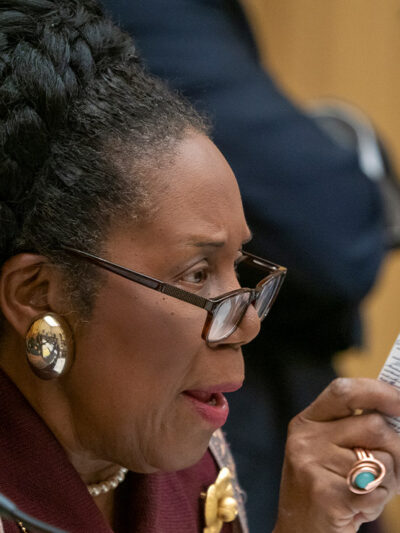
Mayor Turner, We Need Action on Police Reform, Not More Study
This piece was originally published in the Houston Chronicle.
By Tarsha Jackson, Terri Burke
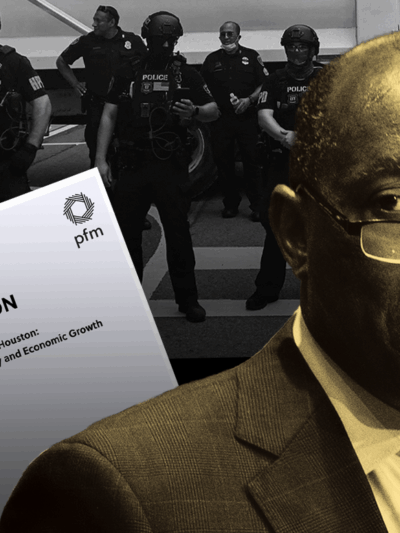
Progress Report: Houston Police Reform
In 2016 and 2017, Mayor Sylvester Turner commissioned two major reports that address police reform. The Mayor’s Transition Committee on Criminal Justice was composed of 26 community leaders, elected officials, academics, and criminal justice reform advocates. It made eight recommendations for reform in March 2016.
By Nick Hudson
Stay Informed
Sign up to be the first to hear about how to take action.
By completing this form, I agree to receive occasional emails per the terms of the ACLU’s privacy statement.
By completing this form, I agree to receive occasional emails per the terms of the ACLU’s privacy statement.