
News & Commentary
Texas Legislative Scorecards: See Where These Candidates Stand
We asked candidates running for State Representative in House Districts 115, 113, 104, and 47 about their positions on 13 key pieces of legislation affecting civil rights and civil liberties in our state. We then studied the results to determine which candidates were supportive of ACLU of Texas priorities. The scores below reflect how current state lawmakers voted during the 2017 legislative session. For challengers, the scores indicate how they would have voted, as indicated in their responses to our candidate questionnaire. Here are the bills we analyzed in each section. Click the header to find out more about each category:
By Brad Pritchett

Supporting Our Constitution, Today and Always
On this date -- some 231 years ago in Philadelphia -- 39 delegates from the fledgling nation known as the United States of America came together to sign the final iteration of its Constitution.
By Selene Escalera
Why We'll Always Need Libraries (and Librarians)
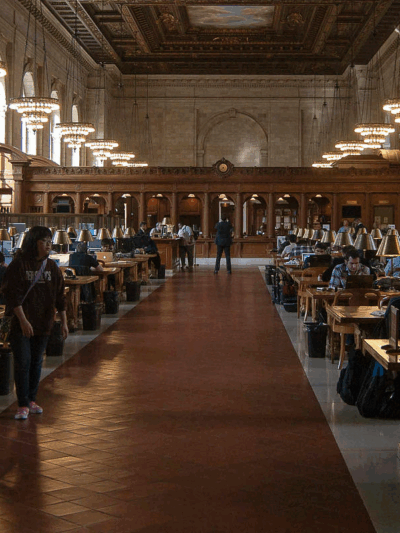
In this second installment of our two-part series celebrating Banned Books Week, I sat down with Peter Coyl, a District Manager for the Dallas Public Library.
Librarians (and Captain Underpants) to the Rescue!
To celebrate Banned Books Week, this year I sat down with three librarians to peek behind the curtain and examine the ways by which library books are chosen and challenged; I also wanted to get the inside scoop on what the future of the library looks like. This first installment of the two-part series features two local school librarians in Houston. Much like the superheroes they are, the two preferred to keep their true identities concealed, so I will be referring to them as “Barbara Gordon” and “Judy Dark," which happen to be the librarian alter-egos of the superheroes "Oracle" and "Luna Moth" (our apologies to D.C. Comics and Michael Chabon). Our next installment will feature my conversation with Peter Coyl, District Manager of the Dallas Public Library.
Banning Books in Texas
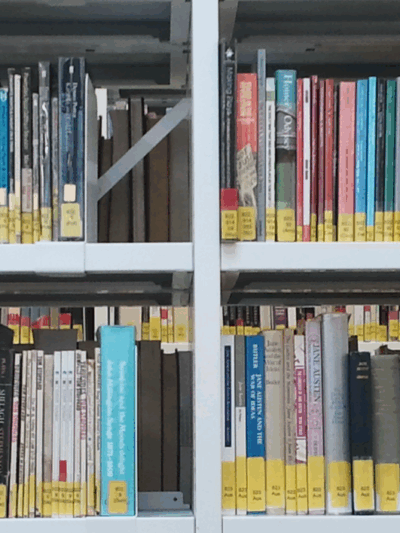
Some residents in Granbury, Texas, are lobbying to remove Princess Boy and This Day in June from the Hood County Library because they “indoctrinate children to the LGBT lifestyle” and “promote perversion." Hood County Library Director Courtney Kincaid decided to keep the books on the shelves, but next week the commissioners’ court will meet to discuss whether or not to reverse her decision. Book banning is one of the worst crimes one can commit against the human intellect, and undermines the free exchange of ideas that is one of the pillars of our democracy. We’ll be keeping a close eye on the commissioners’ court’s deliberations, but in the meantime, we thought we’d take a quick look at other books that have been either banned or challenged in Texas.
By Theanne Liu
How Soon Should Police Turn Off Their Cameras After a Critical Incident?
In January a Black man with his hands up was shot to death by a police officer in New Jersey. Video (and audio) of the incident was captured by the officer's dashcam. The incident didn't receive the attention of the Walter Scott video released Tuesday, probably because it seemed to many to be less clear-cut, and because it lacked a dimension of race-based abuse since the shooting officer was also Black.
By By Jay Stanley, Senior Policy Analyst, ACLU Speech, Privacy & Technology Project
Police Chief: Surveillance Cameras Don’t Help Fight Crime
Last month, the police chief of Lincoln, Nebraska announced that the security cameras watching over the city’s downtown bar scene have not proven effective in his department’s efforts to stem criminal activity. Police Chief Jim Peschong said that the recordings hadn’t helped investigators either identify new suspects or bolster evidence against current ones. Peschong also stated that the cameras hadn’t lowered crime in their vicinity: according to Lincoln Police statistics, there were 128 assaults within 500 feet of the cameras last year, numbers that are on par with the department’s five-year average.
By By Sonia Roubini, ACLU Speech, Privacy, and Technology Project
Why the War on Drugs is So Bad For Privacy
In 2011, for the 50th anniversary of Richard Nixon's declaration of America's "War on Drugs," I wrote a roundup of some of the ways in which the War on Drugs has eroded privacy. Yesterday's news about the DEA's enormous program to collect Americans' call records is a hell of an addition to the list. But with the DEA story fresh in the headlines, it's important to remember a key point about why the drug war has been so corrosive of privacy: drug use is a victimless crime.
By By Jay Stanley, Senior Policy Analyst, ACLU Speech, Privacy & Technology Project
Stay Informed
Sign up to be the first to hear about how to take action.
By completing this form, I agree to receive occasional emails per the terms of the ACLU’s privacy statement.
By completing this form, I agree to receive occasional emails per the terms of the ACLU’s privacy statement.