
News & Commentary
The Fight for Marriage Equality: From Birth to Death and Every Moment in Between
After 22 years together, Jim Obergefell and John Arthur faced the devastating reality that John would not survive another year. John had been diagnosed with amyotrophic lateral sclerosis (ALS) in 2011, a condition for which there is no cure.
By June o
By By Chase Strangio, Staff Attorney, ACLU

We Need Meaningful Immigration Reform, Not Just Theatrics
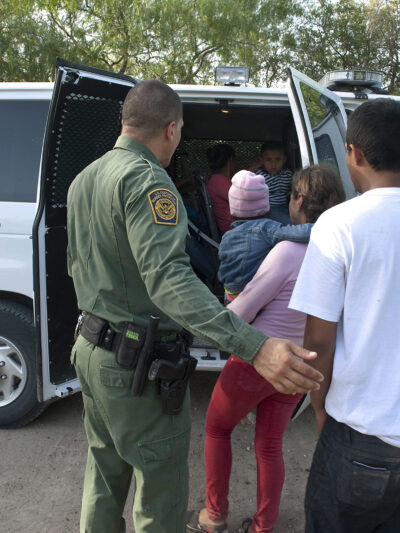
We don’t have a criminal problem at the border Since the beginning of this humanitarian crisis, elected and law-enforcement officials in the Rio Grande Valley have observed no increase in crime. These are children who are running into the arms of the Border Patrol agents. They aren’t sneaking in. They aren’t resisting arrest. They have come to escape the violence and crime in their own countries. Our border is secure Our border communities already face the most militarized zone in the nation, with 3,000 Border Patrol agents in the Rio Grande Valley. The border region does not need more law enforcement agents sent to the area nor does it need the Texas National Guard, whose role is especially unclear. Neither the state Department of Public Safety nor the National Guard has any authority to enforce immigration law. Increasing, yet again, the number of law enforcement personnel patrolling our border communities only escalates the potential for violating border residents’ constitutional rights and reducing the quality of life for everyone at the border. We need to get our priorities straight There are only two kinds of additional boots on the ground needed in the Valley: humanitarian agencies like the Red Cross and more administrative and judicial personnel to screen these immigrants to determine whether they warrant consideration for asylum or refugee status or for U or T visas. Their welfare should be our top priority. What does “securing the border” look like? How you measure success matters. In most of our businesses, we set goals and establish metrics to determine success. The state should do no less. To secure the border, our nation needs legal programs that respect family reunification and more clearly hew to labor demands, among a number of other changes. If you want real change, if you truly want to secure the border, and not just engage in theatrics, then urge Gov. Perry to send needed aid to the border, not more law enforcement.
By Terri Burke
When Walking Down the Street Is a Crime
When Monica Jones left her house on the evening of May 17, 2013, she expected to hang out at a local bar and restaurant and meet up with some friends. But for transgender women of color, just walking down the street can be a criminal act.
By By Chase Strangio, Staff Attorney, ACLU
The Shadow Economy of Lethal Injection Drug Deals
For all we know, the "pharmacy" might be a high school science class.
By By Tanya Greene, Advocacy and Policy Counsel, ACLU
Their Lives Depend on It: Every Unaccompanied Child Needs a Lawyer
At first glance, the kids I met at the Ft. Sill military base in Lawton, Oklahoma, seemed like ordinary teenagers. They wore friendship bracelets they'd made in arts and crafts. Boys had baseball caps and girls had brightly colored nail polish with tiny flowers painted on them. But, one by one, they started to share their stories, and it became clear that their lives are anything but ordinary.
By By Layla Razavi, Regional Advocacy and Policy Counsel, ACLU
New Technology Renews Old Fears of Manipulation and Control
In the first half of the 20th century, Americans gained a new awareness of the malleability and manipulability of the human mind, and the result was a wave of concern over “propaganda” and other techniques of influence. Today we may be seeing a new wave of similar fears as we begin to wonder whether the ways we use and rely upon technology today are making us susceptible to new, dangerous forms of manipulation.
By By Jay Stanley, Senior Policy Analyst, ACLU Speech, Privacy & Technology Project
What Crack Cocaine Teaches Us About NSA Reform
This piece originally ran at POLITICO Magazine.
By By Laura W. Murphy, Director, ACLU Washington Legislative Office & Sandra Fulton, ACLU Washington Legislative Office
Safer Communities and Fewer People Behind Bars
Before he started singing with muppets, John Oliver showed us a lot of boxes of Cheerios. This was in the second minute of his epic rant on the state of the U.S. criminal justice system last week.
By By Sarah Solon, Communications Strategist, ACLU
Stay Informed
Sign up to be the first to hear about how to take action.
By completing this form, I agree to receive occasional emails per the terms of the ACLU’s privacy statement.
By completing this form, I agree to receive occasional emails per the terms of the ACLU’s privacy statement.