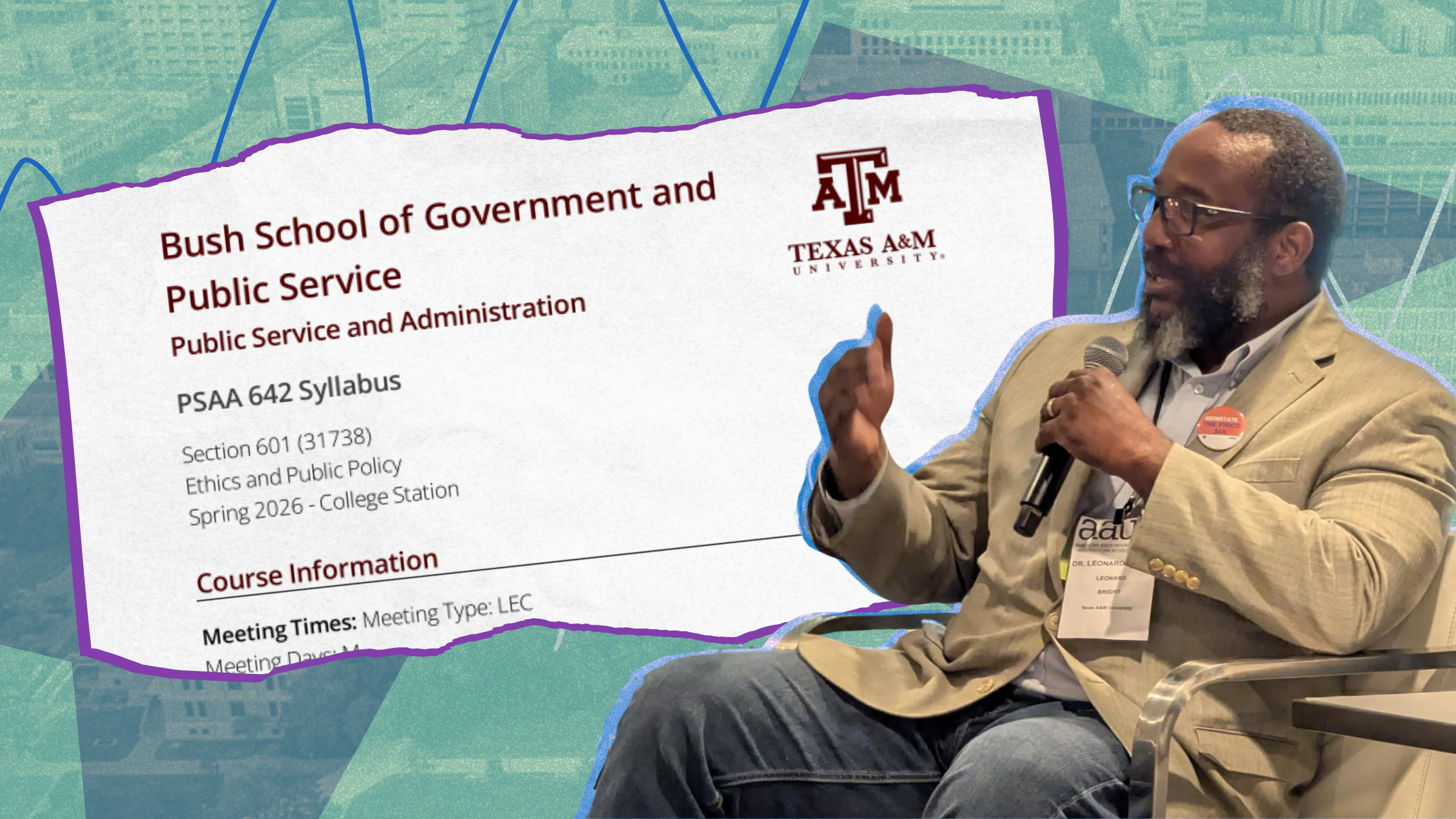
Just three days into the spring 2026 semester, Texas A&M University officials canceled my ethics class — the only one of its kind available to graduate students — due to the university’s new censorship policy.
I was stunned. And I wasn’t the only one. As a result of this dangerous policy, numerous classes across the university system have been canceled or forced to remove content. The Women’s and Gender Studies program has been shuttered altogether because it could not be reconciled with the new censorship policy.
A direct attack on free expression
I like to say that the students who attend my class are often “answering a calling” — dedicating their future careers to working on behalf of their communities. My job is to improve students’ understanding of the world they are going into — to help them make a bit more sense of the vast range of experiences they may encounter.
But Texas A&M University’s chilling censorship policy has impacted my ability to do this job. It has impacted my students’ ability to learn. It has impacted my colleagues’ ability to teach.
Texas A&M University’s censorship policy is harmful. It is a direct attack on free expression and academic freedom.
Texas is home to people of all races, genders, and identities. Our public universities should reflect that reality, not erase it. Texas A&M and all public institutions are meant to be pillars of free expression. Their purpose is to empower students, faculty, and all Texans to engage in open discussions and promote critical thinking.
Students should be introduced to new ideas; they should be given the chance to really grapple with unfamiliar subjects. Not being able to ultimately hurts students' ability to understand, have compassion for, and interact with communities that may have different histories and experiences than them. This attack on academic freedom is dangerous.
Students should have the opportunity to learn the full scope of history. To give them a less-than-honest education is a betrayal of what higher education is supposed to be.
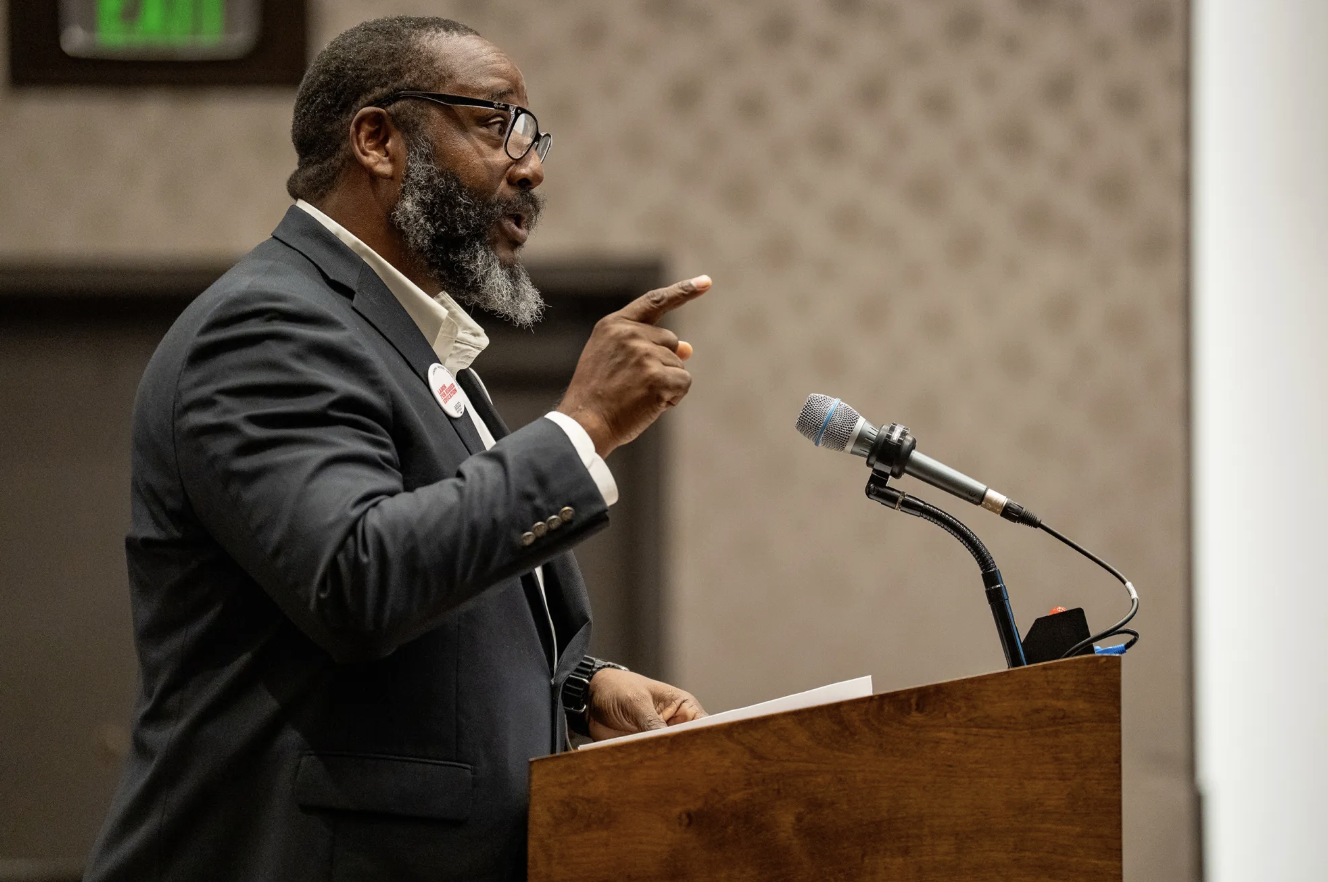
Courtney Sacco for The Texas Tribune
Needing permission to acknowledge our identities
Texas A&M University’s censorship policy strips educators’ ability to teach about real life experiences, history, and theories that support students’ futures.
I feel its impact in a deeply personal way — not only in the cancellation of my course but also in the feeling that I was being asked to walk into my classroom and erase my race.
According to the National Center for Education Statistics, Black men make up approximately 3% of college faculty.
At one point in time, I was the only tenured Black professor at my college. I have had to exist in spaces where I am alone in my racial identity, and it is a real, legitimate experience of mine. The censorship policy is so broad and vague that it seems that any mention of race, gender, or sexual orientation could run afoul of it.
But trying to toe that line would require erasing real parts of my identity and experience, parts of my identity that, in its own way, feeds my work.
I felt I was being asked to not acknowledge my own experiences with structural racism and, thus, the experiences of my community when I step into my classroom — a classroom of students who deserve to hear stories that might or might not sound like their own.
And I’m not alone in this. Other educators are also feeling this fear, second-guessing themselves, and having their own courses or lessons dismantled, including an “LGBTQ Literatures” course, an “Introduction to Race and Ethnicity” course, and, in another example, a philosophy professor was told to remove readings of Plato and related modules on gender.
This censorship doesn’t only jeopardize Texas A&M — it sets a dangerous precedent for all of us. When the government tries to control what we’re allowed to read or teach, it undermines all of our First Amendment rights.
Still, I’m firm in my decision that I will expose my students to a wide range of ideas. Every Texan deserves access to an honest, uncompromised education. Black, Brown, women, and LGBTQIA+ students deserve to learn the histories of their communities. Students who have not shared these experiences and identities deserve a chance to learn about them and better prepare for the world ahead of them.
Working toward a freer, fairer Texas
Texas A&M is a world-renowned institution and one of the largest universities in the country. It claims to support academic freedom while attracting professors from all over to pursue the truth. But when politicians decide which ideas can or cannot be discussed based on their own beliefs, we fail to adequately prepare our students for the careers and lives they seek.
We compromise the future of our state.
My hope is that other educators join our movement to protect all of our First Amendment rights. As teachers, historians, and truth-seekers, it is our responsibility to come together and resist these attempts to silence us. It is our turn to rise to this moment because this, too, will be a moment of history we reflect upon. We, like our students, deserve the right to speak things as we see or experience them. We deserve our classrooms to be ours — and not controlled by politicians.
Whether we’re professors, students, staff, or community members, we all have the right to discuss and access ideas free from government censorship. Together, we can work to ensure that Texas A&M — and all public institutions — uphold our right to free expression and our freedom to learn, teach, and discuss ideas.