
News & Commentary
Sus derechos en la zona fronteriza
El 19 de enero, dos agentes de la Patrulla Fronteriza se subieron a un autobús de Greyhound en una estación de Fort Lauderdale y procedieron a cuestionar a los pasajeros fila por fila. El autobús, que viajaba desde Orlando a rumbo de Miami, no había cruzado ninguna frontera internacional. A pesar que su ruta era dentro de los Estados Unidos, los agentes interrogaron a los pasajeros, y al final detuvieron a una ciudadana jamaiquina, que según alega la Patrulla Fronteriza, se había quedado más del tiempo permitido en su visa de turista. Esta no es un historia aislada, y la práctica no es nueva. Sin embargo, un reciente aumento en este tipo de operación de inmigración —desde Nueva York hasta Florida— ha causado miedo entre viajeros y comunidades de inmigrantes. También ha promovido preguntas importantes sobre el alcance de la autoridad que poseen los oficiales de inmigración y los derechos que uno tiene en estas situaciones.
By Adriana Piñon

On DACA, Congress should not trade one injustice for another
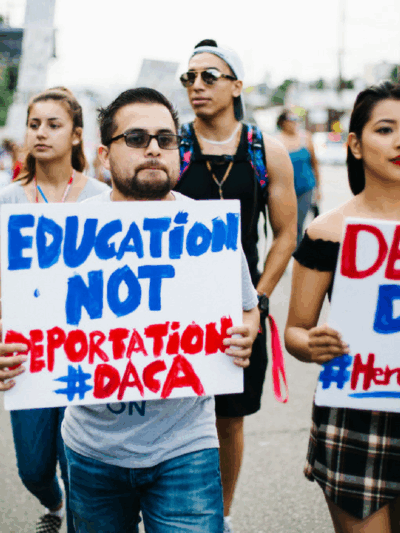
President Donald Trump created a crisis over the Deferred Action for Childhood Arrivals program by rescinding the directive that protected from deportation thousands of undocumented immigrants brought here as children. Now he is holding them ransom, demanding that Congress give him $25 billion for border security, including his “beautiful” wall, in exchange for not rounding up "Dreamers" and sending them into exile.
By Astrid Dominguez, Kevin Bixby, Johana Bencomo
The Status of 287(g) Agreements in Texas
What is a 287(g) agreement?
By Naiyolis Palomo Garcia

Your Rights in the Border Zone
On January 19, two Border Patrol agents boarded a Greyhound bus at a Fort Lauderdale station and proceeded to question passengers row by row. The bus, traveling from Orlando to Miami, had not crossed any international borders. Despite its domestic route, the agents interrogated passengers, ultimately detaining a Jamaican national whom Border Patrol claims had overstayed her tourist visa. This story is not an isolated occurrence, and the practice is hardly new. However, a recent uptick in this type of immigration operation — from New York to Florida — has caused fear among travelers and immigrant communities. It has also raised important questions about the scope of immigration officials’ authority and the rights one has in these encounters.
By Adriana Piñon
"¡Por favor Diosito, por favor Diosito!" videos muestran cómo los agentes de la policía estatal están destrozando familias
Un domingo la pareja “Luis” y “Berta” iban a llegar tarde a misa y estaban conduciendo más rápido que el límite de velocidad. La pareja fue detenida por el agente de del Departamento de Seguridad Pública (DPS) Mirna Gracia. La cámara de la patrulla registró lo que sucedió después.
By Debbie Nathan

"They're taking everybody" — Texas troopers are ripping apart immigrant families during traffic stops
In Texas, State troopers have become frontline enforcers of federal immigration laws. In recent years, and especially since Donald Trump was elected president, the Texas Highway Patrol, part of the state’s Department of Public Safety, or DPS, has developed a well-oiled deportation machine that scoops up drivers who’ve committed minor traffic infractions, then funnels them to the Border Patrol and sometimes Immigration and Customs Enforcement. Passengers and pedestrians who weren’t even driving are also taken into custody. Caught in the Texas deportation pipeline, immigrants’ lives are damaged or ruined, along with those of their children, many of whom were born and raised in the U.S.
By Debbie Nathan

Customs and Border Protection is Out of Control
I am the son of Mexican immigrants. I live in Houston, the most diverse city in the country. And I have family in the Rio Grande Valley where CBP’s abuses are a matter of routine. I know our border communities and the hardships they face, and I am here today to tell you that CBP is out of control.
By Edgar Saldivar

AngelouEconomics Study: Senate Bill 4 Will Jeopardize Texas’ Economic Prosperity
The Trump and Abbott administrations continue to target Texas’s immigrant communities for profiling and discrimination. But if the population of undocumented immigrants declines, so will Texas’ economy.
By Imelda Mejia


Stay Informed
Sign up to be the first to hear about how to take action.
By completing this form, I agree to receive occasional emails per the terms of the ACLU’s privacy statement.
By completing this form, I agree to receive occasional emails per the terms of the ACLU’s privacy statement.