
News & Commentary
Loving Books in a Time of Increasing Censorship
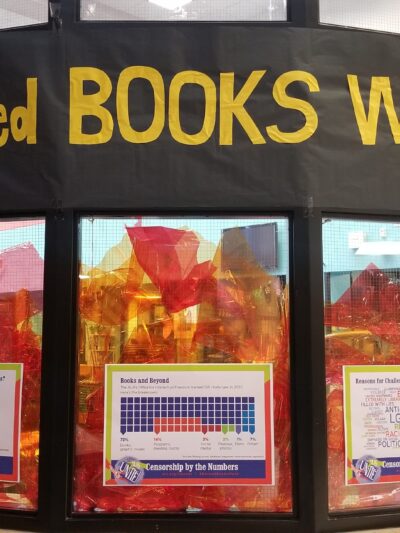
This year’s Banned Books Week (Sept. 26-Oct. 2) has a renewed importance to me and the community of students I serve. You see, I’m a librarian at a public, inner-city high school in Houston. I’ve been an educator and librarian for more than 15 years. I’d like to think that I know what my kids like and need in the safe space I try to create for them through the library and all of its resources. But I sometimes worry about pressures on school communities to censor and exclude certain kinds of information that we as educators strive to teach our kids, especially the ones that most need to see themselves in the materials they consume. What’s important for people to remember is that it’s not just books that are being censored, but any kind of information that can shape a narrative or idea, from a speaker invited to give a talk, to an LGBTQ Pride flag hanging in a window. School districts in Texas are notorious for a more traditional form of idea censorship through the act of officially banning books from school libraries or book club lists. Earlier this year, 13 books were banned from school reading lists in the Leander Independent School District just outside of Austin. Some parents complained about books depicting sexual acts, violence, or profanity — all things that can be accessed in microseconds on a teenager’s smart phone. The situation got so tenuous that a school board member recently resigned.
By Christy S.
Addressing Racialized Violence Against Migrants Requires a Complete Overhaul of Customs and Border Protection
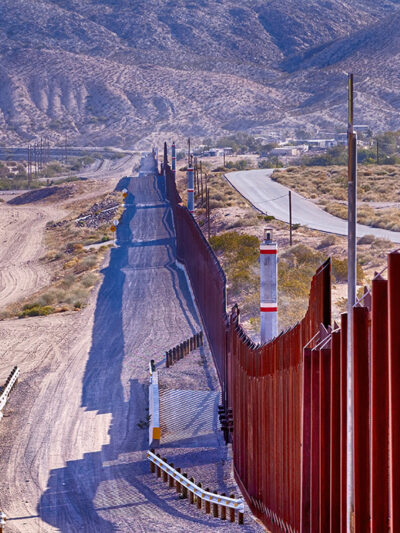
Absent deep reforms, Border Patrol’s long history of racist, violent abuse means inhumanity like that displayed in Del Rio, Texas will continue to repeat itself.
By Shaw Drake, Kate Huddleston
20 Years After 9/11, We Have a Roadmap Toward a More Just and Equitable Future
Will Biden and Congress follow it?
By Hina Shamsi

Things to Know About the Revival of Trump-Era “Remain in Mexico” Policy
Here’s what you need to know about the past, present, and future of the harmful MPP policy.
By Omar Jadwat
Unaccompanied Children’s Well-Being Must Come First at Fort Bliss and Across Texas
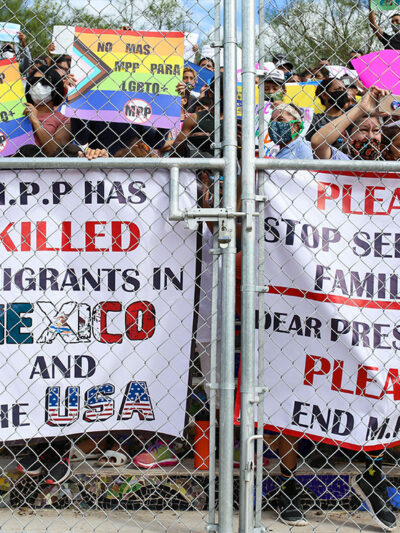
Emergency steps were needed to remove children from Border Patrols facilities, but the Biden administration must now ensure the humane treatment of all migrant children in Texas.
By Bernardo Rafael Cruz, Shaw Drake

Witnessing the Restoration of Asylum at the Texas Border
By the end of Trump’s term in office, the administration had made it almost impossible for migrants to seek asylum. Almost 70,000 migrants who left their homeland out of fear for their safety were forced to wait outside the U.S. border under the Migrant Protection Protocols (MPP). Another 200,000 people were expelled altogether. These are the signs of a collapsed immigration system, where few are afforded the right to apply for asylum.
By Lorena Soto, Michael Seifert

How Did ICE Deport a Survivor of the Walmart Shooting?
Brian Tashman, Deputy Division Director, ACLU
Immigration a
By Brian Tashman

The Texas Legislature in a Time of Turmoil and Transition
Today marks the opening of the 87th Texas Legislative Session — and it signals enormous opportunity and peril for civil liberties in Texas. With a tense national political climate, a pandemic devastating communities across Texas, and lingering racial unrest since the killing of George Floyd, this session will be one of the most challenging — and most important — we have seen in recent history.
By Matthew Simpson

The Election is Over — Now Let’s Lead Freedom Forward
In the past year, we’ve witnessed so many agonizing examples of the brutal reality of systemic racism. We’ve mourned the loss of more than 270,000 American lives from a deadly pandemic. We’ve seen a dramatic shift in the ideological balance at the U.S. Supreme Court, placing abortion access, LGBTQ equality, and voting rights in peril. And threats to our democracy seem to be mounting.
By Rebecca L. Robertson

Stay Informed
Sign up to be the first to hear about how to take action.
By completing this form, I agree to receive occasional emails per the terms of the ACLU’s privacy statement.
By completing this form, I agree to receive occasional emails per the terms of the ACLU’s privacy statement.